



Xtreme Reality
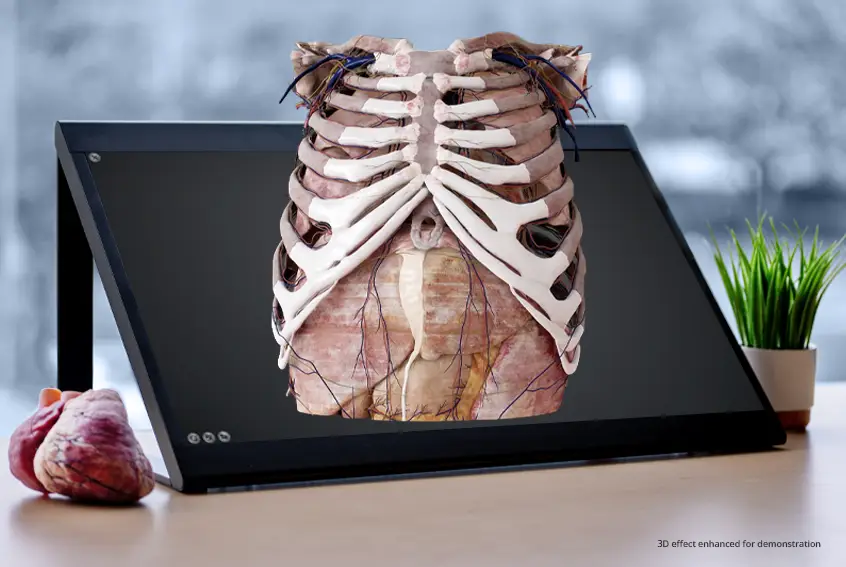
True Holographic Visualization
Anatomage Xtreme Reality builds on this foundation by bringing Anatomage’s high quality volumetric cadaver data into true spatial 3D. Using advanced eye-tracking technology, the system creates a natural viewing experience where anatomy appears physically present. Designed for clarity and prolonged study, Xtreme Reality eliminates the need for headsets or goggles while preserving the full resolution, color accuracy, and structural detail of real human anatomy, delivering a realistic digital anatomy experience that enhances understanding through intuitive, immersive interaction.
Natural Viewing Experience
What Makes Xtreme Reality Unique
Technological Leadership
Anatomage Xtreme Reality offers a wide range of educational applications, serving as both a virtual cadaver lab and a powerful teaching tool. It can replace traditional wet labs, eliminating the need for chemicals and specimen maintenance, while supporting lectures and demonstrations through true spatial visualization of complex anatomical structures. Additionally, it serves as a strategic resource for institutions, helping to attract students and faculty through cutting-edge, interactive anatomy technology.